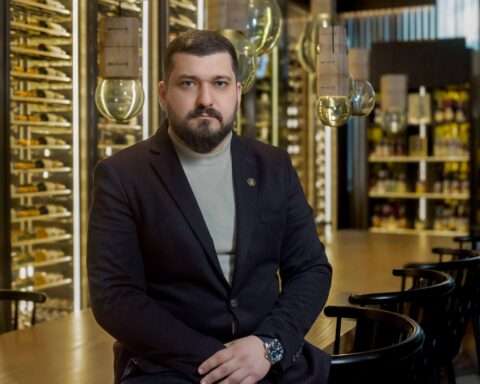
For Zviad Kordzadze, managing partner at Kordzadze Law Office, law has never been just a profession — it has been a continuous process of growth, responsibility and precision. From choosing an unconventional path in his youth to building a multi-award-winning firm recognized as a Golden Brand, his journey reflects both personal determination and a deep commitment to the highest professional standards.
Thank you for reading this post, don't forget to subscribe!In this interview, Kordzadze shares his perspective on what truly drives success, why ethics and adaptability matter more than ever and how staying focused on purpose shapes both a career and its long-term impact.
Q. What shaped your decision to become a lawyer?
A. It was not the most obvious choice at the time. I graduated from school during the Soviet era, when being a lawyer was not considered a particularly desirable profession. My parents actually hoped I would become a doctor. But by my final school years, I had made up my mind. Looking back now, I realize that the broader environment in the country played a role too — the spirit of fighting for freedom and independence gave me a strong sense of purpose and influenced my professional path.
Q. Your law firm has been named a Golden Brand winner multiple times. What do you think is behind that success?
A. From the very beginning, my goal was simple: to create a space where clients could find comprehensive legal support in one place. Today, our firm provides a full range of legal services across various fields, working with both local and international clients.
But success does not come from structure alone. It comes from trust. Over the years, we have built long-term relationships with our clients and that is largely due to two things: quality and ethics. When clients feel that, they come back and they bring others with them.
Another important factor is adaptability. The legal field, like everything else, is evolving rapidly. What used to change every five years now shifts much faster. If you stop learning, you fall behind. Staying current is not optional, it is essential.
Q. You work across multiple areas of law. Was that a deliberate decision?
A. Yes, absolutely. From the start, I did not want to limit myself to a narrow specialization. I work in criminal, civil, corporate and administrative law. Of course, specialization has its advantages and I respect those who choose that path. But if you can maintain high quality across multiple areas, versatility becomes a real strength.
Q. In your opinion, what defines a truly good lawyer?
A. There is an important distinction between a lawyer and an advocate. A lawyer must know the law — the rules, the boundaries. But when a client comes to an advocate, they are not just looking for knowledge. They want a solution.
An advocate needs strategy — knowing not just what to say, but when to say it. Timing can be everything, especially in court. Sometimes holding back is more powerful than speaking.
Also, this profession can easily tempt you into seeking visibility or recognition. But that should not be the goal. Your focus must always be the client’s case. Public image is secondary — results are what truly matter.
And one more thing: if you do not genuinely love this profession, you will not last long. It is emotionally demanding and requires constant effort. Many people leave because they underestimate that.
Q. You describe yourself as a perfectionist. How has that influenced your leadership?
A. It is a double-edged sword. Being demanding, especially of yourself, can drive results, but it also means you tend to expect the same from others. Over time, I have learned that people are different. As a leader, your role is not to impose one standard, but to recognize individual strengths and bring out the best in each person.
Experience has also taught me something else: you are not always right. And what feels right today might not be right in 20 years. Context matters. People act based on their circumstances, and it is important to understand that before judging.
Q. You were recently elected Chair of the Association of Law Firms of Georgia. What does this new role mean to you and what are your priorities for the coming years?
A. It is a great responsibility and, at the same time, an important opportunity to contribute to the development of the legal profession on a broader scale.
Over the next four years, our focus will be on strengthening the role of the Association and ensuring it remains a meaningful platform for both legal professionals and society. Key priorities include supporting the development of a strong rule-of-law system, protecting human rights and promoting high standards in legal education and professional ethics.
Another crucial aspect is reinforcing the role and independence of lawyers. Without independence, it is impossible to ensure justice. So, our goal is to create an environment where legal professionals can operate freely, responsibly and at the highest standards.
Q. Finally, what do you believe leads to real, lasting success?
A. It starts with desire, a genuine inner drive. Then comes clarity of goals. I often ask students where they see themselves in ten years and many do not have an answer. Without a clear goal, it is very hard to move forward.
Success also requires constant learning. You need to stay sharp — keep up with laws, court decisions, new developments.
And above all, you have to love what you do. You might earn money without passion, but it will not last. Behind every lasting achievement, there is hard work — a lot of it.