The Invisible Tsunami: How a Middle East War Is Quietly Draining Asia’s Factories — and Why America Should Be Worried

April 24, 2026
Asia's Factories

What began as a distant conflict over the Strait of Hormuz has set off a chain reaction across Asia’s vast industrial network — and the evidence suggests the United States has underestimated how quickly it could feel the consequences at home.

Thank you for reading this post, don't forget to subscribe!

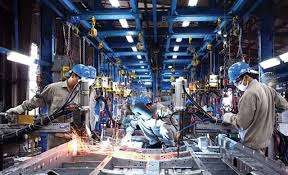
April 24, 2026 — There is a particular kind of economic crisis that moves slowly enough to ignore, right up until the moment it can no longer be ignored. The supply shock radiating across Asia right now is that kind of crisis. It does not show up on a single dramatic ticker. It arrives in stages: a force majeure declaration here, a rationed fuel allocation there, a container ship delayed, a factory running at 70 percent capacity when it was supposed to run at 100.

By the time it is visible at a consumer level in the United States — in a car dealership with thin inventory, or a pharmacy with restricted supplies — the underlying disruption will have been building for months. That buildup is happening now.

The Strait That Moved the World

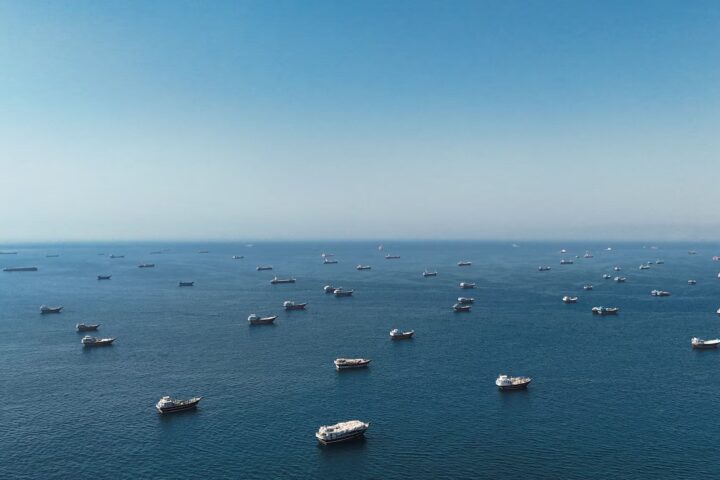
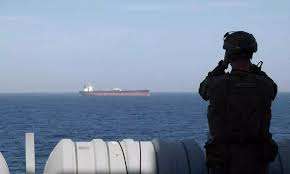
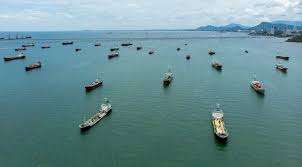
The Strait of Hormuz is, by many measures, the most economically consequential stretch of water on earth. Roughly a fifth of all global oil passes through it on any given day. But oil is far from the only thing that moves through its narrow passage. Petrochemicals, fertilizers, aluminum precursors and industrial gases all transit through the region in enormous quantities.

The Middle East supplies approximately a quarter of the world’s polypropylene and a fifth of its polyethylene — materials that end up in everything from food packaging to automobile interiors to medical devices. It is the source of around a quarter of global sulphur supply and 15 percent of fertilizer production. These numbers are not abstractions. They are the raw material inputs that determine whether a factory in Ulsan, South Korea or Jurong Island, Singapore can fill its orders on time.

Since the war began and the strait closed, those inputs have stopped flowing. Energy analytics firm Kpler has projected that oil supply losses from the closure will total 700 million barrels by the end of April alone. The financial and operational consequences are already visible across Asia: fuel rationing, force majeure declarations by petrochemical giants and workers facing higher costs and longer journeys just to reach their shifts.

America’s Supply Chain: Hardened but Not Immune

The United States spent several painful years after 2020 rethinking its supply chain vulnerabilities. The pandemic exposed a dangerous over-reliance on single-source suppliers, and the tariff turbulence of 2025 forced companies to move faster than they otherwise would have in diversifying their sourcing. By most measures, U.S. supply chains are more resilient today than they were five years ago.

But resilience and invulnerability are different things. Roughly half of the goods Americans consume originate from Asia, and a significant portion of the remainder depends on Asian intermediate inputs. When a disruption is severe enough and geographically broad enough to affect the entire region — not just one country or one trade corridor — the diversification buffers built in recent years provide meaningful but limited protection.

“It’s much harder to extricate America from this cleanly,” one senior industry executive told analysts, contrasting the current crisis with the tariff battles of 2025. Trade policy can be reversed. A war closure of a major shipping strait cannot be switched off with a phone call.

The IMF’s spring 2026 outlook laid out the arithmetic with unusual precision. Asia’s growth is now expected to moderate from 5 percent in 2025 to 4.4 percent this year under the baseline scenario — a scenario that already assumes a fairly swift resolution to the conflict. Under the adverse scenario, with higher and more persistent energy prices, growth in Asia’s largest economies would fall by nearly a full additional percentage point. Under the severe scenario — where the disruption extends into 2027 — cumulative output losses could approach two percentage points, with global inflation pushing above six percent.

Asia’s Spiraling Supply Crisis Is the Story America Isn’t Fully Watching Yet

The domestic U.S. news cycle has largely framed the Middle East war as a geopolitical and humanitarian story, which it certainly is. But it is also an economic story — one with a very direct line from the Strait of Hormuz to an American factory floor, and from that factory floor to an American consumer’s wallet.

Consider the auto industry. Aluminum, already in short supply following the strait’s closure, is a core input for modern vehicle manufacturing. Supply chain analysts have estimated it could take roughly four months from the onset of sustained shortages before automakers are forced to cut production. That timeline, measured from the opening weeks of the conflict, brings the most acute pressure to bear sometime in the summer or early fall. Plastics follow a similar arc, with meaningful shortages potentially spreading globally within roughly three months.

The agricultural sector faces a different but equally serious threat. Fertilizer production depends heavily on sulphur and petrochemical feedstocks, both of which flow through the Middle East. A prolonged disruption to fertilizer supply chains does not just raise prices — it can affect crop yields in the following planting season, with consequences that ripple through food supply and food inflation well beyond 2026.

What Comes Next, and What Americans Can Do

Economists are not predicting a repeat of the pandemic’s most chaotic supply shortages. The warning signs are arriving earlier this time. Companies have more sophisticated contingency plans. Strategic inventories are better stocked. There is genuine reason to believe that if the conflict resolves in the coming months, much of the potential damage can be avoided.

But the longer the Strait of Hormuz remains closed, the more that calculus shifts. The IMF has been explicit that downside risks are elevated and that the window for a contained outcome is narrowing. Every additional week of disruption draws down the buffers that took years to build.

For American consumers and businesses, the prudent response is not alarm but alertness. Those managing supply chains should be pressure-testing their sourcing assumptions now. Policymakers should be gaming out the downstream scenarios. And ordinary Americans should understand that the distant war they have been watching on their televisions has a supply chain attached to it — one that runs through their daily lives in ways that are quiet, invisible, and increasingly hard to ignore.

This article draws on reporting and data from Fox News, NBC News, BBC, CNN Business, the International Monetary Fund, and McKinsey Global Institute’s 2026 global trade analysis.


Focus Keywords: Asia supply crisis United States 2026, Strait of Hormuz supply chain impact, Middle East war US economy, global supply shock Americans, Asian industrial disruption US goods, oil shortage supply chain 2026

Brian Gomiz

Brian Gomiz

14 years in media business

Don't Miss

Josh Shapiro

Gov. Josh Shapiro – Blaze at Governor’s Mansion: Suspect in Custody

A 38-year-old Harrisburg man has been arrested for allegedly setting
Joe Biden

Biden rejects calls to quit the race, vows to ‘finish the job because so much is at stake’

At his first solo news conference in eight months, U.S.