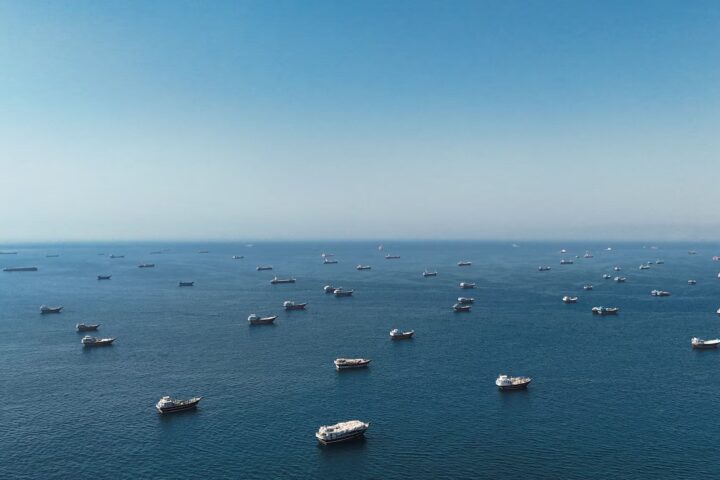
Few geographic features carry the weight of the Strait of Hormuz, where Iran’s influence remains firmly entrenched, promising to define energy geopolitics well into the future despite concerted efforts to counter it. This narrow waterway, often described as the world’s most critical oil chokepoint, continues to underscore how a combination of geography, military strategy, and economic interdependence allows Tehran to maintain a powerful hand even after recent military setbacks and international pressure. The core reality persists: Iran’s sway over the strait is here to stay.
Thank you for reading this post, don't forget to subscribe!As of June 4, 2026, shipping traffic through the strait has only partially rebounded following months of heightened tensions sparked by U.S. and Israeli strikes on Iranian targets earlier this year. While some tankers have resumed routes under escorted convoys, insurance rates remain elevated, and global energy analysts warn that any new provocation could quickly reverse fragile gains. The events of 2026 have served as a stark reminder of the strait’s vulnerability and Iran’s enduring capacity to disrupt it.
Historical Precedents and Modern Realities
The story of the Strait of Hormuz is one of recurring tension. During the 1980s Iran-Iraq War, the so-called Tanker War saw both sides attack commercial vessels, foreshadowing today’s dynamics. Fast-forward to recent decades, and Iran has repeatedly threatened to close the strait in response to sanctions or military threats, though full closure has never materialized due to the immense costs it would impose on Tehran itself. Yet the credible threat alone has proven a potent deterrent.
In the current context, the 2026 crisis began with targeted strikes that damaged Iranian military infrastructure. Iran responded with a campaign of harassment, deploying swarms of small boats, drones, and reported mine-laying operations that forced shipping companies to pause transits. The result was a temporary drop of several million barrels per day in oil flows, sending shockwaves through markets already strained by other global factors.
Iran’s Enduring Influence Over the Strait of Hormuz: Why It Persists
Several structural factors explain why Iran’s position in the Strait of Hormuz appears remarkably durable. At its narrowest, the passage is only about 21 miles wide, with two shipping lanes each two miles wide separated by a buffer zone. Iran controls the northern coastline and several strategically located islands, giving its forces a clear line of sight and rapid deployment capability that distant naval powers struggle to match continuously.
Tehran has cultivated an asymmetric military doctrine specifically tailored for this environment. The Islamic Revolutionary Guard Corps Navy emphasizes speed, surprise, and low-cost tools over conventional fleet power. Coastal missile batteries, underwater drones, and fleets of fast-attack vessels allow Iran to impose significant costs on adversaries without needing to win outright naval battles. Military experts note that while the U.S. Navy can dominate open waters, patrolling the confined waters of the strait against determined guerrilla-style tactics would require a sustained, expensive commitment.
Economic realities further cement this influence. Approximately 20-21 million barrels of oil pass through the strait daily under normal conditions, representing roughly 20% of global seaborne petroleum trade. Qatar’s massive liquefied natural gas exports also rely on the same route. Alternative pipelines across Saudi Arabia and the UAE exist but operate well below the volume needed to replace sea shipments entirely. Expanding them would take years and face both technical and political hurdles. As long as global demand — especially from fast-growing Asian economies — remains tied to Gulf supplies, the strait retains its outsized importance.
Economic Consequences That Echo Worldwide
The ripple effects of disruptions in the Strait of Hormuz are felt far beyond the Middle East. In early 2026, oil prices surged toward $110 per barrel at moments of peak uncertainty, contributing to inflationary pressures in Europe, Asia, and the United States. Developing nations dependent on imported fuel faced particularly acute challenges, with some governments subsidizing energy costs to prevent social unrest.
Shipping companies reported dramatic increases in war-risk insurance premiums, sometimes tripling overnight. Many vessels chose the much longer route around the Cape of Good Hope, adding weeks to journeys and raising freight costs. For oil-producing Gulf states, the instability threatened revenues even as they quietly accelerated diversification efforts. China and India, the largest importers through the strait, have urged restraint from all parties while maintaining diplomatic and economic ties with Tehran.
Diplomatic Impasse and the Limits of Pressure
International diplomacy has struggled to resolve the underlying issues. Negotiations involving the United States, European powers, Gulf Arab states, and Iran have repeatedly stalled over core disagreements: Iran’s nuclear ambitions, its support for regional proxies, and its demand for a greater role in Gulf security arrangements. While temporary ceasefires have allowed partial reopening of the strait, few observers believe a lasting framework is imminent.
U.S. officials continue to stress the principle of freedom of navigation, conducting regular patrols and freedom-of-navigation operations. Yet senior defense analysts acknowledge that indefinite policing of the strait carries political risks and high operational costs, especially amid competing global priorities. Iran, for its part, portrays its actions as defensive responses to external aggression, rallying domestic support by framing the strait as a matter of national sovereignty and pride.
Military Asymmetries and Tactical Realities
Iran’s defensive posture benefits from the physical characteristics of the waterway. The mountainous coastline provides natural cover for mobile launchers and surveillance systems. Its arsenal includes advanced anti-ship missiles acquired or developed domestically, capable of threatening large tankers from shore-based positions. Combined with drone technology refined through use in other conflicts, these capabilities create a layered threat environment.
Recent incidents demonstrated the effectiveness of these tactics. Even limited actions — such as seizing vessels or conducting missile tests near shipping lanes — were enough to deter commercial traffic without crossing into full-scale war. This calibrated approach allows Iran to signal resolve while avoiding the catastrophic consequences of completely shutting down its own vital export route.
Regional Voices and Shifting Alliances
Perspectives across the Gulf vary. Oman, which controls the southern shore of the strait, has often acted as a quiet mediator, leveraging its neutral stance. Saudi Arabia and the United Arab Emirates have invested heavily in eastern pipelines and port facilities to reduce dependence, but these measures provide only partial relief. Smaller Gulf states watch developments nervously, balancing relations with both Washington and Tehran.
China’s growing economic footprint adds another dimension. As Beijing’s largest supplier of Gulf energy, it has economic incentives for stability but has resisted efforts to isolate Iran completely. Russia and other actors further complicate the picture, contributing to a multipolar environment where no single power can dictate terms.
Human and Environmental Dimensions
Beyond strategy and economics, the human element remains crucial. Thousands of mariners transit the strait regularly, facing heightened risks during periods of tension. Coastal communities on both sides depend on the waters for fishing and trade, and major incidents could trigger environmental disasters with long-lasting consequences for marine ecosystems already under stress.
In Iranian ports and islands near the strait, local populations view control of these waters as integral to their identity and economic well-being. This domestic constituency strengthens Tehran’s determination to maintain its position.
Future Outlook: Managing Rather Than Resolving Risk
Looking ahead, most analysts foresee a pattern of managed tension rather than outright resolution. Iran is likely to retain significant influence through its geographic advantages and military posture, using the strait as leverage in broader negotiations. International actors will probably continue combining deterrence with diplomatic engagement, seeking to prevent major disruptions while acknowledging the limits of their power to fundamentally alter the status quo.
The 2026 events have reinforced an uncomfortable truth in energy geopolitics: some chokepoints are exceptionally difficult to bypass. As the world transitions toward renewable energy over the coming decades, the strait’s importance may gradually diminish, but that process will unfold slowly. In the meantime, prudent planning by governments and markets must account for Iran’s persistent role.
Stakeholders from Washington to Beijing are thus compelled to navigate a complex balance — strengthening naval capabilities and alternative supply routes where possible, while pursuing pragmatic dialogue to reduce the risk of future crises that could dwarf the disruptions seen this year.