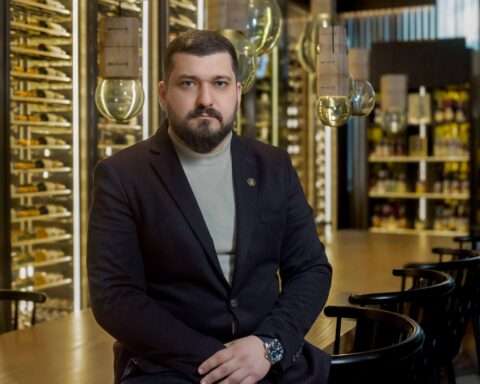
For nearly a decade, Georgian snack brand Solari has consistently earned recognition as a Golden Brand, a distinction that reflects strong consumer trust and market leadership in the sunflower seed category. The company has managed to expand its product portfolio, strengthen its nationwide distribution network and maintain steady growth. In this interview, Iuri Tkebuchava, the General Director of Solari, reflects on the company’s performance in 2025, the evolving dynamics of consumer demand, export ambitions and the strategic vision shaping the brand’s next phase of development.
Thank you for reading this post, don't forget to subscribe!Q. Solari has held the Golden Brand title for several years. How has this recognition influenced the brand’s positioning and strategy over time?
A. Solari has held the Golden Brand title for nine consecutive years, a recognition that reflects strong consumer trust. The award has strengthened the brand’s image as a reliable, quality-focused Georgian company, expanded opportunities in new product categories and reinforced its market reputation. For Solari, the title is not just a status symbol but a responsibility that drives ongoing investment in high standards and product development.
Q. How would you summarize 2025 for the company? What were the key achievements, challenges and turning points?
A. 2025 was a period of development and systemic strengthening for the company. Despite the highly competitive nature of the fast-moving consumer goods sector and strong price sensitivity in the market, Solari not only maintained its position but also achieved double-digit growth.
The key achievements of the year included improvements in product quality standards, the expansion of the product portfolio and maintaining strong sales and category leadership despite intense competition.
Today, Solari products are available in 12,000 retail outlets across the country, reflecting a strong distribution network and extensive market coverage. For us, presence in 12,000 stores is not just a number, it represents the daily trust of consumers choosing our products.
The company employs 65 people and our team forms the foundation of the brand’s stability and growth. When 65 people work toward the same goal, the result becomes more than just a product — it becomes trust.
Our main achievement was not only growth, but sustainable growth. For years, we have chosen long-term stability over short-term aggressive expansion.
Q. Today Solari offers eight types of products. How do you decide which new categories to add to the portfolio?
A. Today Solari offers eight different products, including sunflower seeds, nuts and grain-based snacks.
The company places particular emphasis on raw material quality and natural taste. Every new category added to our portfolio is based on market analysis, consumer behavior insights and profitability assessments.
We do not introduce new products simply to expand the assortment. A new category is added only when there is growing market demand, a shortage of high-quality products in a specific segment, or an opportunity to offer consumers competitive pricing combined with a reliable and stable supply.
Portfolio diversification also allows the company to spread risk and maintain stable revenue streams.
Q. Sunflower seeds remain your sales leader. Why does this category remain so popular in Georgia and how do you maintain a competitive advantage?
A. Sunflower seeds are a traditional and consistently demanded category in the Georgian market. Their popularity stems from both affordability and long-standing consumption habits.
The company places special emphasis on raw material quality. For example, we use special confectionery sunflower varieties and non-GMO raw materials, which play a crucial role in determining the product’s taste and overall quality.
Our goal is not short-term sales growth. Our strategy is based on sustainable development, allowing us to maintain a strong market position over many years.
Q. Competition in the food sector is intense. What differentiates Solari — quality, price, packaging, distribution or branding?
A. Competition in the food sector is extremely high, which means success requires a combination of several factors.
Solari’s key differentiators are its strict quality control and adherence to high standards, a competitive pricing strategy that balances cost and value, modern consumer-oriented packaging and branding and a wide, efficient distribution network.
We are not trying to be the cheapest player on the market. Our goal is to be the most reasonable choice, a product that offers stable quality at a fair price.
Q. What new developments or improvements have you implemented recently?
A. On the production side, processes have been optimized to increase efficiency and reduce losses. In logistics, improved planning models have been introduced to ensure more effective inventory management.
At the same time, we are gradually updating our packaging, aiming to maintain the brand’s visual identity while offering consumers a more modern and practical product.
Q. Last year you mentioned negotiations with an Armenian company regarding exports. What is the current status?
A. Last year, Solari engaged in negotiations with an Armenian partner interested in importing and distributing its products. Discussions covered assortment, logistics, pricing and market positioning, but regional political and economic instability slowed progress. While large-scale exports have not yet started, small shipments and interest from neighboring markets, including Armenia, continue. Developing exports remains a strategic priority, with nearby regional markets as the most realistic first step.
Q. How important is local production for the brand’s identity and how do you ensure a stable supply of raw materials?
A. All of Solari’s raw materials are imported, as local sources either do not exist or fail to meet the required quality standards. The company prioritizes reliable international suppliers and strict quality control, while production, product development and processing take place in Georgia, maintaining the brand’s local identity. To manage global supply risks such as price volatility, rising transport costs and occasional logistics disruptions, Solari works with multiple suppliers, evaluates partners carefully and maintains longer-term inventory planning. This approach ensures a stable, high-quality supply and uninterrupted operations.
Q. What is Solari’s strategic vision for the next three to five years?
A. Solari’s long-term strategy focuses on expanding its product range in line with market demand, increasing production capacity, growing sales and brand awareness and developing opportunities to enter regional and international markets. The company aims to be not only a strong Georgian brand but also a competitive player in the wider region. While the coming years will be marked by growth and expansion, one principle remains unchanged: quality will always be the core value of the brand.