President Trump announced a significant reduction in U.S. tariffs on Indian imports to 18 percent from a combined 50 percent rate, declaring that the change followed an agreement with Prime Minister Narendra Modi to cease purchases of Russian oil and redirect sourcing toward American supplies and potentially Venezuelan crude.
Thank you for reading this post, don't forget to subscribe!The declaration, posted on Truth Social on February 2, 2026, came hours after a telephone conversation between the two leaders. Trump framed the move as a diplomatic breakthrough born of “friendship and respect,” one that he said would deprive Russia of oil revenue funding its war in Ukraine and strengthen bilateral economic ties. White House officials confirmed the rollback included eliminating a 25 percent punitive tariff imposed last summer specifically over India’s Russian oil imports, while adjusting the baseline reciprocal tariff from 25 percent to 18 percent.
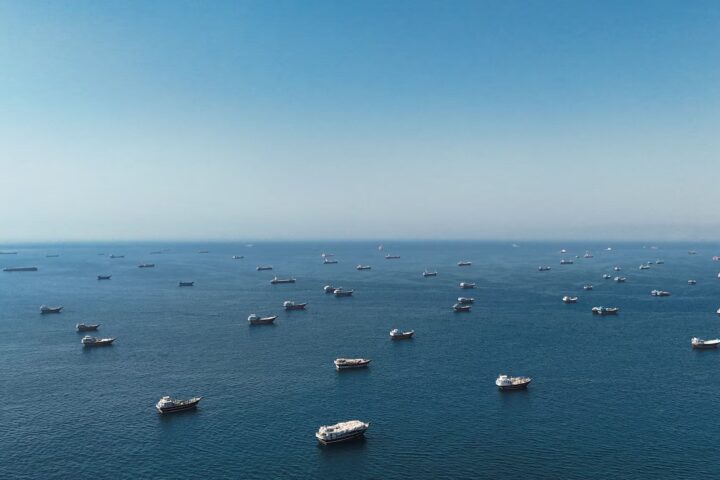
The agreement arrives against a backdrop of months of trade friction, during which the United States pressed India—the world’s third-largest oil importer—to curtail its reliance on discounted Russian crude. Those purchases surged after Moscow’s 2022 invasion of Ukraine, as India capitalized on steep discounts shunned by many Western buyers under sanctions. The policy helped stabilize domestic fuel prices amid global volatility but drew repeated American criticism for indirectly sustaining Russia’s economy.
Trump’s earlier tariff escalations, beginning with a 25 percent levy and doubling to 50 percent in August 2025, were explicitly punitive, aimed at coercing a shift in New Delhi’s energy strategy. The reversal signals a pragmatic de-escalation, though questions linger about the precise commitments and their enforceability.
A Phone Call and a Swift Announcement
Trump’s Truth Social post detailed the purported terms: India would halt Russian oil imports, pivot to U.S. and possibly Venezuelan sources, reduce trade barriers to zero on American goods, and commit to purchasing “hundreds of billions” in U.S. energy, technology, agriculture, coal, and other products. He tied the deal to broader goals of ending the Ukraine conflict, asserting that cutting Moscow’s oil income would hasten peace negotiations.
A senior White House official, speaking anonymously, affirmed that the punitive tariff linked to Russian oil was being rescinded because India had “agreed to stop” such purchases. The adjustment to 18 percent aimed to harmonize duties more closely with those on other major trading partners.
Prime Minister Modi responded on X with measured enthusiasm, thanking Trump “on behalf of the 1.4 billion people of India” for the announcement and expressing optimism about elevating the partnership. His statement highlighted benefits for “Made in India” products under the lower tariff but omitted any explicit reference to ending Russian oil imports or adopting zero barriers on U.S. goods. The asymmetry in emphasis underscored potential differences in interpretation.
Indian officials have long navigated a delicate balance: preserving strategic and defense ties with Russia—supplier of most military hardware—while deepening economic and security cooperation with the United States through frameworks like the Quad. Abruptly severing energy links could disrupt supply chains, raise costs, and complicate domestic politics.
Trump Slashes Tariffs on India After Claiming Modi Agrees to Stop Buying Russian Oil
In framing the accord, Trump emphasized personal rapport with Modi and immediate implementation. “Effective immediately,” he wrote, the United States would apply the reduced reciprocal tariff. He portrayed the shift as mutually beneficial, predicting an “even stronger” relationship and substantial gains for American exporters.
The announcement also reflected Trump’s broader use of tariffs as leverage in foreign policy, a tactic deployed against various partners to extract concessions on trade, security, or geopolitical issues. Supporters hailed it as effective diplomacy that advanced U.S. interests without military escalation, while critics questioned whether the claimed commitments would hold or merely paper over ongoing divergences.
Energy market analysts noted practical hurdles in swiftly replacing Russian volumes. India’s refiners are configured for certain crude grades, and alternatives from the U.S. or Venezuela involve higher costs, logistical challenges, and lingering sanctions complexities on Caracas. Recent reports indicated some reduction in Russian imports in early 2026, but a complete halt would mark a major pivot.
Economic Impacts and Market Reactions
The tariff cut offered prompt relief to Indian exporters in key sectors such as textiles, pharmaceuticals, gems, jewelry, and information technology services, which had absorbed higher costs under the elevated regime. Industry groups in both nations welcomed the de-escalation as a foundation for deeper negotiations, potentially toward a comprehensive bilateral trade agreement.
Indian stock markets rallied modestly in response, with the rupee strengthening against the dollar amid optimism over export recovery. Finance Minister Nirmala Sitharaman described the development as positive for growth and competitiveness, while Commerce Minister Piyush Goyal indicated that a joint statement on the pact was forthcoming.
Globally, oil prices showed limited immediate reaction, reflecting doubts about rapid demand shifts. Russia’s economy, heavily reliant on energy exports, faces continued pressure from Western sanctions, though India had been one of its largest remaining buyers.
The deal intersects with parallel efforts, including India’s advancing free trade talks with the European Union, which could further diversify its options and lessen dependence on U.S. market access. Some observers suggested Washington’s concession may stem partly from concern over eroding influence in a vital Indo-Pacific partner amid competition with China.
Unresolved Questions and Strategic Implications
Full details of implementation—timelines for oil sourcing changes, verification mechanisms, and reciprocal barrier reductions—remain undisclosed. No formal bilateral communique has outlined binding commitments, leaving room for future adjustments or disputes.
Critics in Washington and abroad expressed skepticism about enforcement, noting Modi’s reticence on the Russian oil issue in public statements. Some foreign policy experts warned that coercive tactics risk straining alliances at a moment when unified responses to China and other challenges are needed.
For Trump, the announcement bolsters his narrative of deal-making prowess and “America First” priorities, linking trade policy to national security goals like weakening Russia’s war effort. It also aligns with efforts to boost U.S. energy exports, a priority since his return to office.
India, meanwhile, gains breathing room on trade while preserving strategic flexibility. The arrangement could facilitate greater U.S. investment and technology transfers, supporting Modi’s vision of economic self-reliance.
As negotiations continue, the accord represents a tactical reset rather than a fundamental realignment. Whether it evolves into a durable partnership or falters over unmet expectations will depend on follow-through in the coming months.
The episode highlights the interplay of economics, energy security, and geopolitics in an era of great-power competition. For now, it offers a respite from confrontation, with potential benefits for businesses and consumers on both sides of the Pacific.
Focus keywords: Trump slashes tariffs India, Modi stop Russian oil, US India trade deal 2026, Trump Modi agreement, tariffs reduced to 18 percent, Russia oil purchases India, Trump Truth Social trade announcement, US India energy shift Venezuela